
 Facebook
 Whatsapp
 LinkedIn
 Pinterest
Emerging Healthcare Technology Trends to Watch in 2026
The healthcare landscape has undergone a remarkable transformation. Technologies that once seemed futuristic are now embedded in everyday clinical practice. What once felt disruptive in 2023–2024, AI-assisted diagnostics, virtual care, and connected devices, have now become foundational. In 2026, the focus has shifted toward intelligent automation, interoperability at scale, continuous patient monitoring, and AI systems that work quietly in the background, improving outcomes without adding cognitive load.
Key market indicators for healthcare technology trends in 2026:
- AI in healthcare market: $26.57 billion (38% annual growth rate through 2030)
- Healthcare IT market: $387-420 billion globally in 2026
- Projected growth: $1,834 billion by 2030 (15.8% CAGR)
- Cloud computing healthcare: $62.47 billion projected by 2030
- Remote patient monitoring: 40% reduction in ED visits
- Telehealth adoption: Standard practice across major health systems
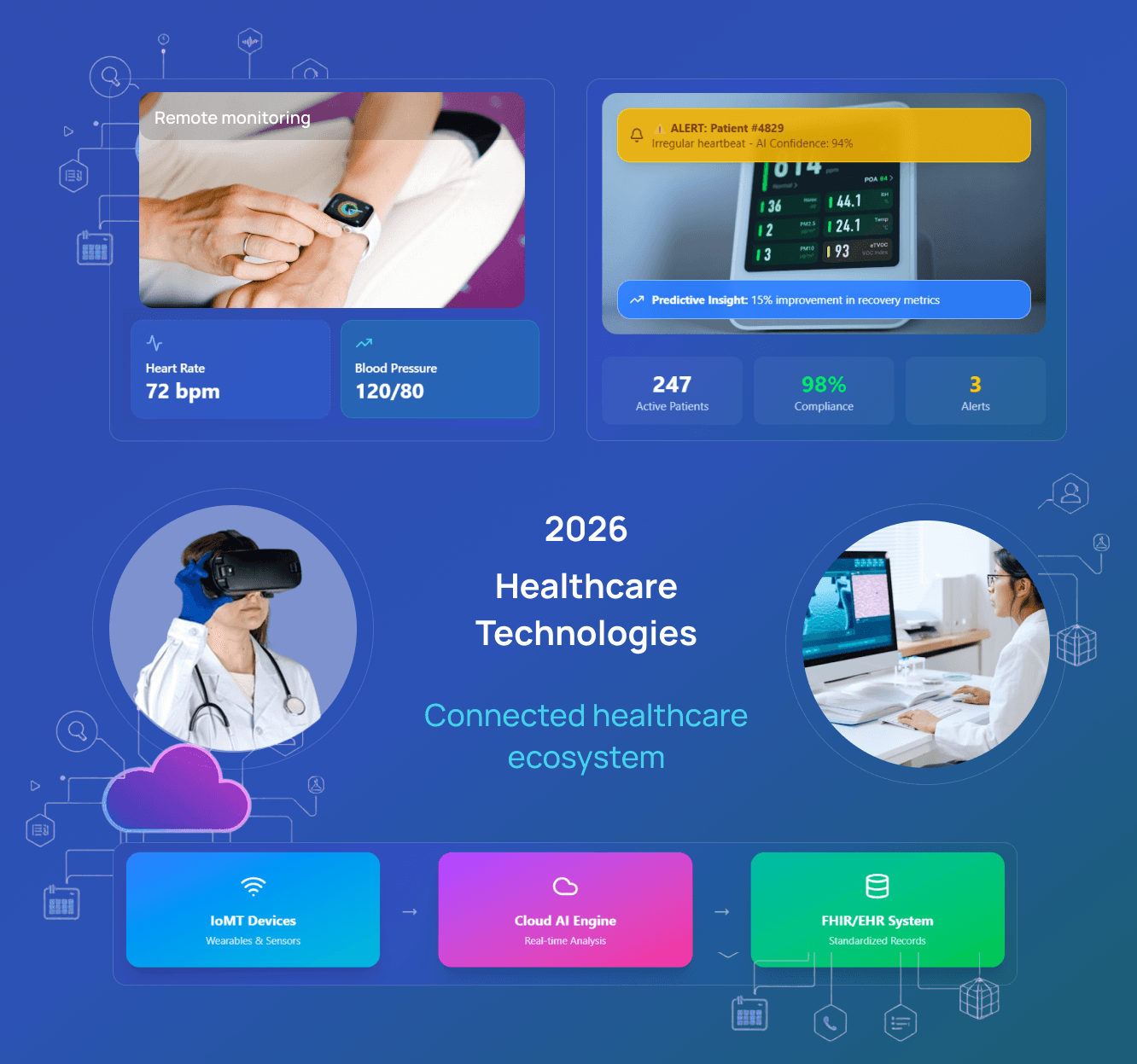
These healthcare technology trends represent an interconnected digital infrastructure where AI-powered diagnostics, real-time remote monitoring, and interoperable health records create an ecosystem delivering personalized, accessible, and cost-effective care at an unprecedented scale. Healthcare providers, payers, and digital health startups must now adopt technologies that are clinically validated, regulation-ready, interoperable, and ROI-driven. Below are the top 12 healthcare technology trends defining 2026, and why they matter.
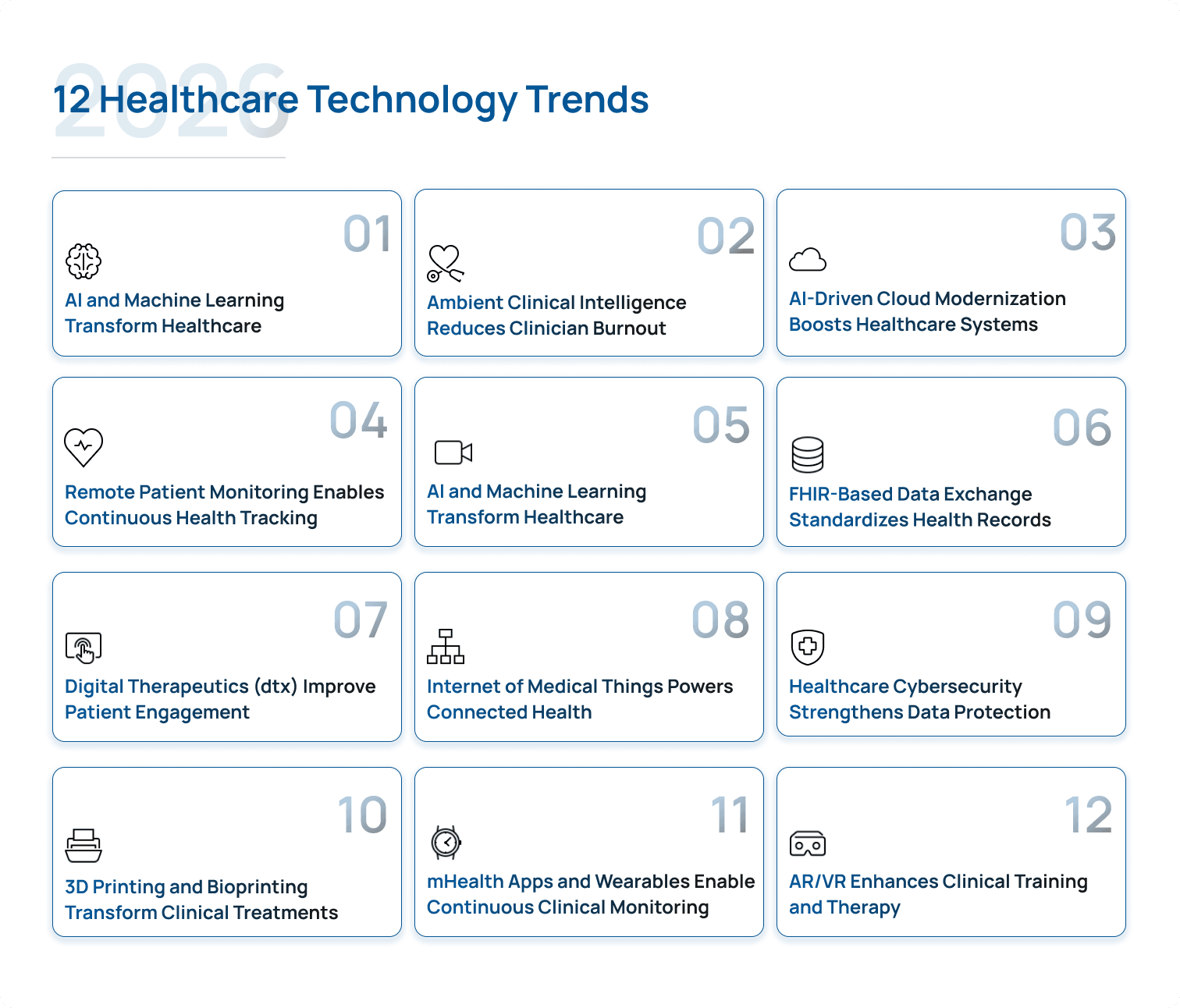
1. AI and Machine Learning Transform Healthcare Delivery
AI and machine learning are the most transformative healthcare technology trends in 2026. In specific cancer applications, these technologies deliver diagnostic accuracy of up to 95%, compared with 88% for radiologists working without assistance, and shorten drug discovery timelines by 60–70%.
Clinical applications of AI in 2026
- Medical imaging analysis detects early-stage diseases years before symptoms.
- Predictive analytics reducing hospital readmissions by 25-40%
- Drug discovery platforms design therapeutic compounds in months vs. years
- Administrative automation cuts healthcare operational costs by 20-30%
Machine learning platforms now process electronic health records, genomic profiles, and real-time wearable data to create personalized treatment plans with higher success rates and fewer side effects. Companies like Insilico Medicine successfully used generative AI to design novel therapeutic compounds for idiopathic pulmonary fibrosis in months rather than the traditional decade-long timeline.
Economic impact: Healthcare organizations implementing comprehensive AI strategies report significant improvements in resource allocation, provider satisfaction, and patient outcomes while reducing the administrative burden that contributes to clinician burnout.
2. Ambient Clinical Intelligence Reduces Clinician Burnout
Ambient clinical intelligence tackles healthcare burnout by cutting documentation time by up to 70%. These AI-powered systems passively capture patient-provider conversations and automatically generate clinical documentation without interrupting workflow.
How ambient intelligence works in 2026
- Advanced speech recognition captures natural clinical conversations
- Natural language processing generates structured clinical notes in real-time
- EHR integration populates data fields and generates billing codes automatically
- Real-time clinical decision support identifies drug interactions and care gaps
Physicians previously spent two to three hours documenting for every hour of patient care. Ambient intelligence platforms like Microsoft’s Nuance DAX now serve over 350,000 clinicians globally, with implementations showing 70% reductions in documentation time and measurable improvements in provider satisfaction scores.
Provider impact: Healthcare organizations report higher clinician retention, improved patient satisfaction scores, and renewed connection to the fundamental reasons providers entered medicine, direct patient care rather than administrative tasks.
3. AI-Driven Cloud Modernization Boosts Healthcare Systems
Cloud modernization powered by AI is an essential infrastructure for healthcare technology trends in 2026. The healthcare cloud computing market is projected to reach $62.47 billion by 2030 as organizations migrate from legacy systems to scalable, secure cloud platforms.
Cloud infrastructure benefits for healthcare
- Scalability accommodating explosive data growth from genomics and imaging
- HIPAA and GDPR compliance through AI-driven data management
- 40-50% capital expenditure reduction versus traditional data centers
- Real-time interoperability across care settings and health systems
- Disaster recovery ensuring 99.99% uptime for critical patient systems
AI-driven cloud systems optimize storage, enhance retrieval speeds, and ensure regulatory compliance automatically. Machine learning algorithms classify and organize healthcare data, making information instantly accessible to authorized users while maintaining strict security protocols.
Operational efficiency: Healthcare organizations of all sizes now access enterprise-grade technology capabilities previously available only to large academic medical centers, leveling competitive advantages across the industry.
4. Remote Patient Monitoring Enables Continuous Health Tracking
Remote patient monitoring has evolved from a pandemic workaround to a standard clinical practice, enabling 40% reductions in emergency visits. Modern remote patient monitoring solutions leverage advanced biosensors and connected devices to transmit real-time physiological data from patients’ homes directly to care teams.
Remote monitoring capabilities in 2026
- Vital signs tracking: heart rate, blood pressure, oxygen saturation, temperature
- Chronic disease metrics: glucose levels, cardiac rhythms, respiratory function
- AI algorithm analysis identifying concerning trends before emergencies
- Proactive intervention preventing 30% of hospital readmissions
Healthcare organizations implementing comprehensive remote monitoring programs report substantial improvements in chronic disease management for conditions including heart failure, diabetes, COPD, and hypertension. Patients appreciate convenient care delivered in their homes without disrupting daily routines.
Patient empowerment: Continuous connection to care teams provides reassurance and support, particularly for elderly patients or those managing multiple conditions, while real-time health insights foster engagement and accountability in self-management.
5. Virtual Care and Telehealth Expand Access
Telehealth has matured into comprehensive digital delivery models ranking among the most democratizing healthcare technology trends in 2026. Platforms now support complex clinical encounters, including urgent care, chronic disease management, behavioral health therapy, and specialist consultations.
Telehealth platform capabilities
- High-definition video with diagnostic-quality audio
- AI assistants conducting pre-visit symptom assessment and vital signs collection
- Connected diagnostic devices streaming real-time data to remote providers
- Hybrid care models blending virtual and in-person visits based on clinical appropriateness
Access to care has expanded exponentially, particularly benefiting rural populations, individuals with mobility limitations, and patients in healthcare deserts lacking local specialty services. A patient in a remote town can now consult with specialists thousands of miles away, receiving expertise previously available only at major academic medical centers.
Behavioral health transformation: Teletherapy and telepsychiatry eliminate geographic barriers, reduce stigma, and provide convenient access that increases treatment adherence, partially addressing critical mental health provider shortages.
Enable scalable virtual care with custom telemedicine app development, designed for interoperability, AI-driven workflows, and regulatory compliance.
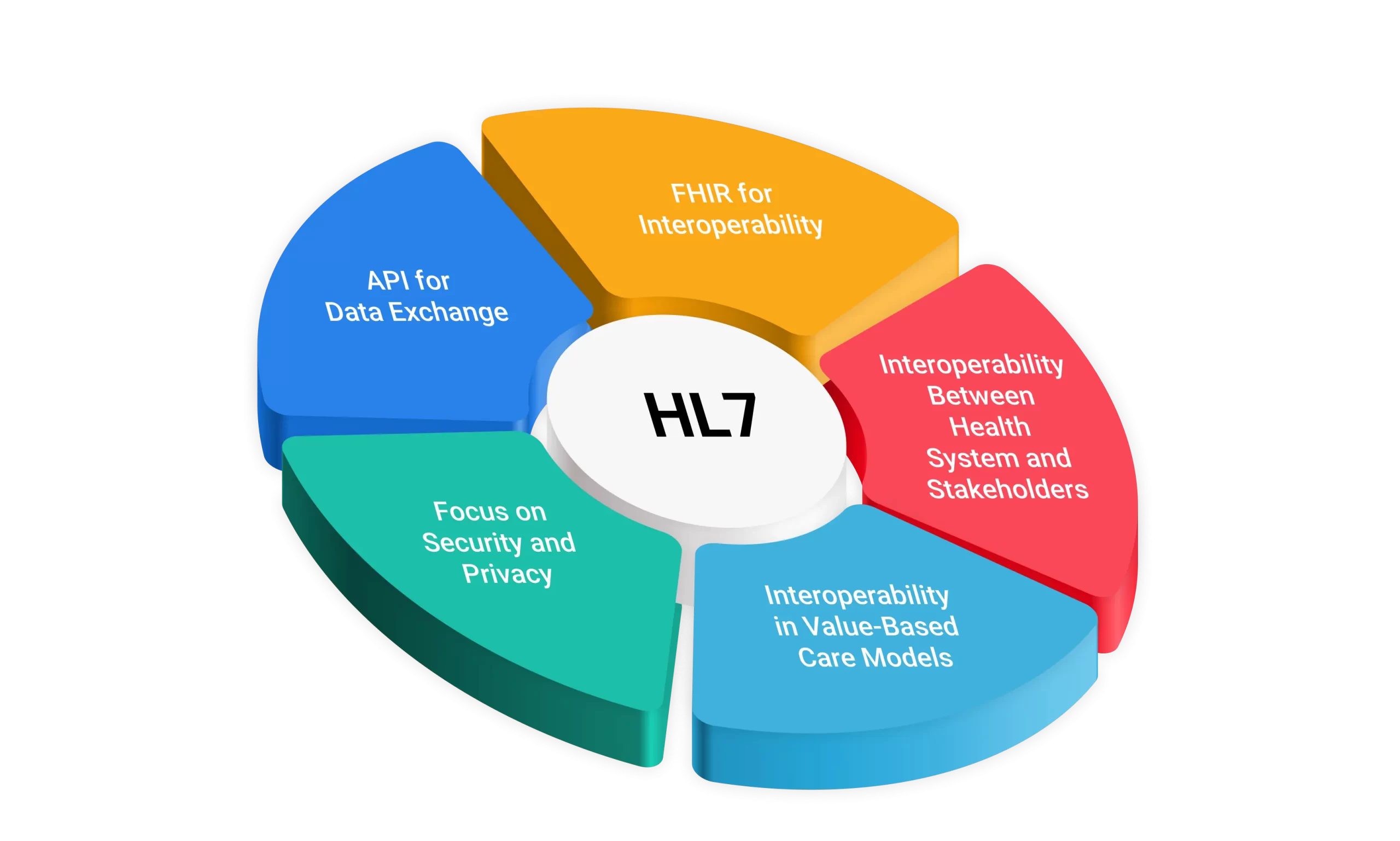
6. FHIR-Based Data Exchange Standardizes Health Records
FHIR (Fast Healthcare Interoperability Resources) has achieved critical mass in 2026, solving healthcare’s interoperability crisis. This standardization enables different EHR systems to communicate seamlessly using modern web-based technologies.
FHIR implementation benefits
- Complete patient records transfer between providers in seconds
- Emergency departments access critical information about unconscious patients
- Patient-controlled health record apps aggregate data from multiple sources
- Research initiatives analyze real-time data across diverse healthcare systems
- Clinical trials identify eligible participants and collect outcomes more efficiently
Prior to widespread FHIR adoption, healthcare data existed in silos with proprietary formats requiring expensive custom interfaces. Patient records were fragmented across multiple providers with no efficient aggregation mechanism, leading to duplicated tests, medication errors, and suboptimal care coordination.
Patient empowerment: Individuals now aggregate complete health data from multiple sources into personal health record apps, gaining comprehensive visibility into medical information and sharing it with family caregivers through standardized APIs.
7. Digital Therapeutics (DTx) Improve Patient Engagement
Digital therapeutics use software platforms to provide clinically validated treatments that have received FDA authorization. These clinically validated applications treat diabetes, hypertension, behavioral health disorders, substance abuse, chronic pain, and neurological conditions through behavior modification and cognitive training.
Digital therapeutics applications in 2026
- Diabetes management programs are achieving better glycemic control than traditional care alone.
- Cognitive behavioral therapy apps showing equivalent efficacy to in-person therapy
- Substance abuse programs reducing relapse rates by 35-45%
- Chronic pain platforms decrease opioid dependence while improving quality of life
The distinction from wellness apps is crucial – digital therapeutics undergo rigorous clinical trials demonstrating efficacy and safety, receive FDA approval as medical devices, and are prescribed by clinicians as part of comprehensive treatment plans.
Engagement design: Sophisticated behavioral science principles, personalization algorithms, gamification elements, social features, and just-in-time interventions drive sustained behavior change that traditional care often fails to achieve.
8. Internet of Medical Things Powers Connected Health
The Internet of Medical Things (IoMT) has created interconnected ecosystems of devices and sensors, transforming clinical environments in 2026. Hospital asset tracking, implantable monitors, and home health devices continuously communicate with clinical information systems.
IoMT applications across care settings
- Hospital: Smart IV pumps, patient beds, asset tracking, environmental sensors
- Implantable: Pacemakers, neurostimulators, drug delivery systems with remote monitoring
- Home health: Connected pill bottles, smart scales, fall detection, medication dispensers
- Data analytics: Predictive maintenance, utilization trends, clinical deterioration detection
Connected infrastructure generates unprecedented real-time health data while enabling remote device management, predictive maintenance, and intelligent coordination across healthcare environments. Smart pacemakers communicate with monitoring platforms, allowing clinicians to remotely adjust settings without requiring office visits.
Operational efficiency: Healthcare facilities optimize workflow, reduce equipment losses, ensure life-saving devices are available when needed, and prevent service disruptions through predictive maintenance algorithms.
9. Healthcare Cybersecurity Strengthens Data Protection
Healthcare cybersecurity has emerged as a patient safety imperative among critical healthcare technology trends in 2026. The healthcare sector faces unique challenges as a prime target for ransomware attacks due to valuable patient data and life-critical systems that cannot tolerate downtime.
Modern cybersecurity strategies:
- Zero-trust architectures require continuous authentication for every access request
- Multi-factor authentication prevents credential theft from compromising systems
- AI-powered threat detection monitors network traffic for anomalies in real-time
- Automated incident response isolates compromised systems within seconds
- Medical device security through network segmentation and vulnerability management
High-profile ransomware attacks, data breaches exposing millions of patient records, and sophisticated phishing campaigns have elevated cybersecurity from a technical concern to a strategic business priority, affecting patient safety directly.
Human element: Comprehensive training programs teach staff to recognize phishing attempts and protect credentials, while simulated campaigns test learning and identify individuals requiring additional support.
10. 3D Printing and Bioprinting Transform Clinical Treatments
3D printing and bioprinting have transitioned from experimental curiosities to practical clinical tools. These technologies create patient-specific anatomical models, custom prosthetics, surgical guides, and living tissue constructs that fundamentally change treatment approaches.
Clinical applications of 3D printing:
- Surgical planning models improve outcomes by reducing operative time and complications by 25-35%
- Custom prosthetics and orthopedic implants are precisely matched to individual anatomy
- Dental crowns, bridges, and orthodontic appliances are produced in hours versus weeks
- Bioprinted skin grafts treating severe burns without donor site complications
Surgeons planning complex procedures for brain tumors, congenital heart defects, or facial reconstruction now hold exact anatomical replicas, studying relationships between structures and rehearsing approaches before making incisions.
Bioprinting frontier: Living cells serve as “ink” to construct three-dimensional tissue structures. Skin grafts, cartilage constructs, and organoids enable drug testing and disease modeling, supporting preclinical research workflows through clinical trial management software.
11. mHealth Apps and Wearables Enable Continuous Clinical Monitoring
Mobile health applications and wearable devices have achieved clinical-grade sophistication, ranking among the most patient-empowering healthcare technology trends in 2026. Smartphones and smartwatches now function as comprehensive health monitoring platforms.
Advanced wearable sensor capabilities:
- Blood oxygen saturation and irregular heart rhythm detection
- Blood pressure estimates and electrocardiogram recordings
- Sleep stage analysis and stress indicators from heart rate variability
- Non-invasive glucose monitoring eliminates finger stick testing for diabetes management
Modern wearables measure far beyond step counts and heart rate, with accuracy and reliability improving to levels where clinicians increasingly incorporate this data into medical decision-making rather than dismissing it as unreliable.
Closed-loop monitoring: Integration between wearables, mobile apps, and clinical systems creates automated workflows where abnormal readings generate care team alerts, enabling proactive intervention before health status deteriorates.
Learn how integrating wearable devices into healthcare apps enables secure data flow, interoperability, and real-time clinical decision support.
12. AR/VR Enhances Clinical Training and Therapy
Augmented reality and virtual reality have matured into essential tools for medical education, surgical training, and patient therapy. These immersive technologies create realistic simulations, accelerating skill development while reducing training risks.
AR/VR applications in healthcare 2026
- Medical education: VR platforms allowing students to explore 3D anatomy and practice procedures safely
- Surgical training: Procedural modules with haptic feedback providing realistic practice
- Surgical planning: AR overlays projecting imaging data onto surgical fields during actual procedures
- Patient therapy: VR-guided physical rehabilitation, pain management, exposure therapy for PTSD
Medical students put on VR headsets to walk through the human body at various scales, examining organ systems and tracing vascular pathways with unprecedented detail. Standardized virtual patients enable repeated practice of clinical reasoning without subjecting real patients to inexperienced trainees.
Remote collaboration: AR enables expert surgeons to guide less experienced colleagues through complex procedures in real-time, regardless of physical location, extending specialty expertise to rural hospitals lacking local specialists.
What Sets Fortunesoft Apart in Transforming Healthcare Technology?
Fortunesoft IT Innovations has established leadership in healthcare technology implementation through unwavering commitment to innovation, security, and clinical excellence. With over 16 years of specialization in healthcare technology solutions, we deliver systems that address the most critical healthcare technology trends shaping 2026.
Our comprehensive healthcare technology services
- Telemedicine platforms providing seamless virtual care experiences
- AI and machine learning solutions for clinical decision support and predictive analytics
- Cloud migration and modernization leveraging scalable, secure infrastructure
- Internet of Medical Things implementations connecting devices into intelligent ecosystems
- Mobile health applications are driving patient engagement and adherence
What distinguishes Fortunesoft
- Rigorous adherence to HIPAA, FDA, HL7, FHIR, and GDPR compliance requirements
- Security-by-design principles ensure patient safety and data protection
- Team combining software engineers, data scientists, and healthcare domain experts
- Track record with startups to health systems serving millions of patients
- Solutions that clinicians want to use and patients find intuitive and valuable
Our development processes incorporate comprehensive testing protocols and validation procedures that ensure solutions meet the highest standards for patient safety, regulatory compliance, and data protection – providing healthcare organizations with confidence that their technology investments will withstand scrutiny.
Conclusion
The healthcare technology trends dominating 2026 represent a fundamental transformation in care delivery, monitoring, and patient experience. From AI-powered clinical intelligence to bioprinting, from FHIR interoperability to ambient documentation, these interconnected technologies create an ecosystem where healthcare is more accessible, personalized, efficient, and effective than ever before.
Key takeaways on healthcare technology trends
- AI and machine learning achieve superhuman diagnostic accuracy and accelerate drug discovery.
- Ambient intelligence streamlines documentation – cutting workload by up to 70% – so clinicians can focus more on patient care.
- Cloud modernization provides enterprise capabilities at 40-50% lower costs
- Remote patient monitoring prevents 40% of emergency department visits
- Telehealth has permanently democratized access to specialty care and behavioral health
For healthcare organizations navigating this landscape, strategic partnerships with experienced technology providers have never been more critical. Successful implementations require technical expertise combined with a deep understanding of clinical workflows, regulatory requirements, and human factors determining technology adoption success.
At Fortunesoft IT Innovations, we stand ready to help healthcare organizations harness these transformative healthcare technology trends to achieve better, more accessible, more efficient care. Whether modernizing existing systems, implementing AI capabilities, developing patient engagement platforms, or building entirely new digital health solutions, our team brings the expertise and innovation required to turn vision into reality.
Contact Fortunesoft IT Innovations today to leverage the most powerful healthcare technology trends in 2026 and transform your organization’s ability to serve patients effectively.
Sources
- Artificial Intelligence in Healthcare Market – Fortune Business Insights
- AI in Healthcare Market – Research and Markets Report
- Healthcare IT Market Forecast – Grand View Research
- KFF: Premium Increases for Small Business in 2026
Author Bio




Related Blog


3 min read






 Start Chat